
The COVID-19 screening interface was the application at the heart of the COVID-19 co-assessment response: not a mock-up or a demonstrator, but a full working prototype - a complete clinical application built end-to-end on openEHR clinical models, developed and piloted for care-home screening during 2020, and published open source through the Apperta Foundation.
- Source code: COVID-19 screening interface using openEHR clinical models (Apperta Foundation, GitHub)
Built on openEHR clinical models
Everything the application records is structured openEHR data. The screening forms are driven by openEHR archetypes and templates - including the openEHR COVID-19 archetype set ratified by the international community in June 2020 - and every submitted assessment is stored in an open clinical data repository rather than a private database. That is the DITO thesis applied whole: the clinical models are the application, and any other front-end or analytics tool can read the same records.
This is what made the ten-day design sprint and the rapid build possible: the clinical content was modelled once, openly, and the interface rendered it.
What the application does
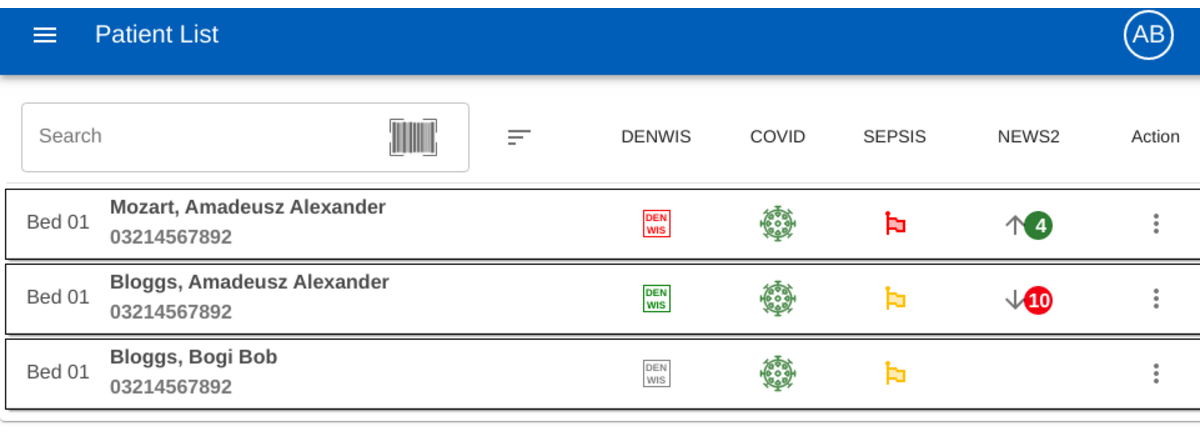
Care staff work from a patient list that carries each resident's current status at a glance - latest NEWS2 score with trend, DENWIS status, sepsis red or amber flags and COVID-19 screening state - with search and barcode lookup for fast bedside identification.
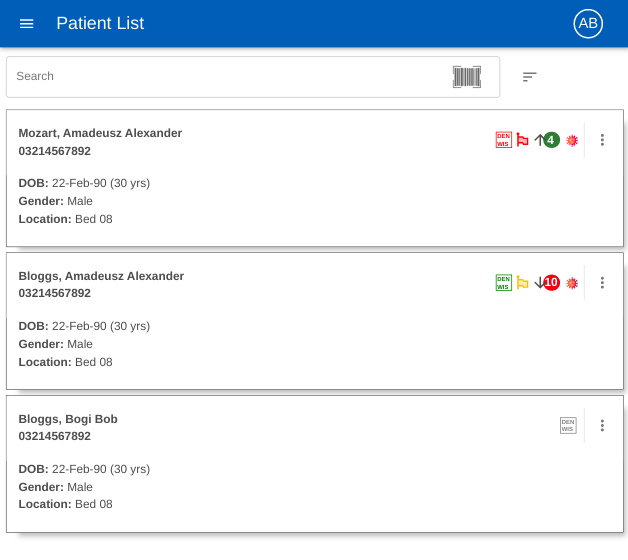
Assessments are structured around SBAR (Situation, Background, Assessment, Recommendation), the clinical communication standard. Within an assessment, staff capture:
- NEWS2 observations - respiration, saturation, oxygen delivery, blood pressure, pulse, consciousness and temperature, grouped clinically (A+B, C, D+E), with the score calculated on submission.
- COVID-19 screening - the structured screening questions from the openEHR COVID-19 models.
- Sepsis screening - risk factors, likely infection source and red/amber severity flags, with escalation guidance following the NICE recommendation.
- DENWIS concern questions - the Dutch Early Nurse Worry Indicator Score, capturing the "nurse is worried" signal as structured data alongside the numeric scores.
The Sepsis, DENWIS and full NEWS2 functionality was added in the Innovate UK "Extension for Impact" phase, carrying the work to February 2021.
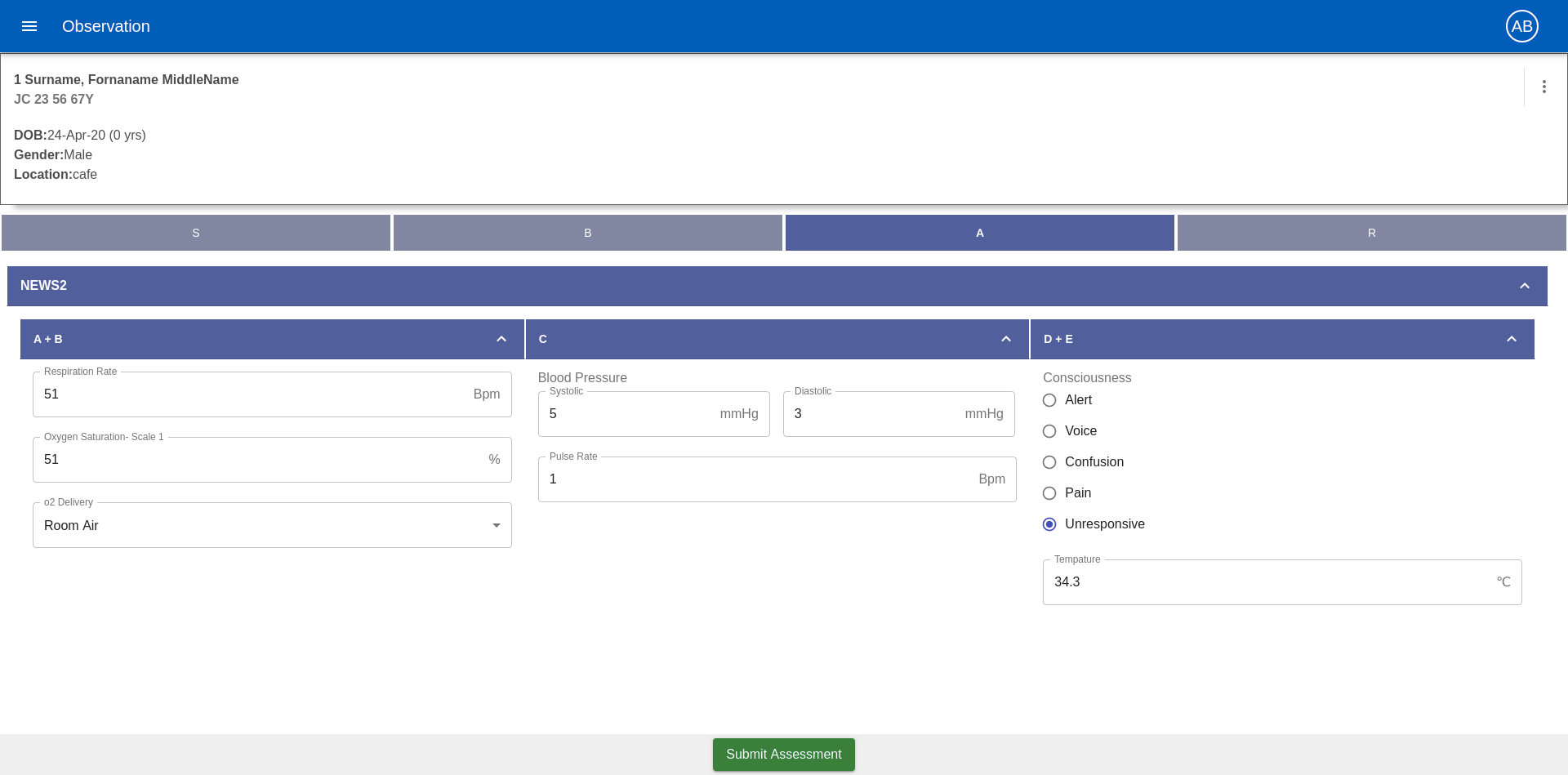
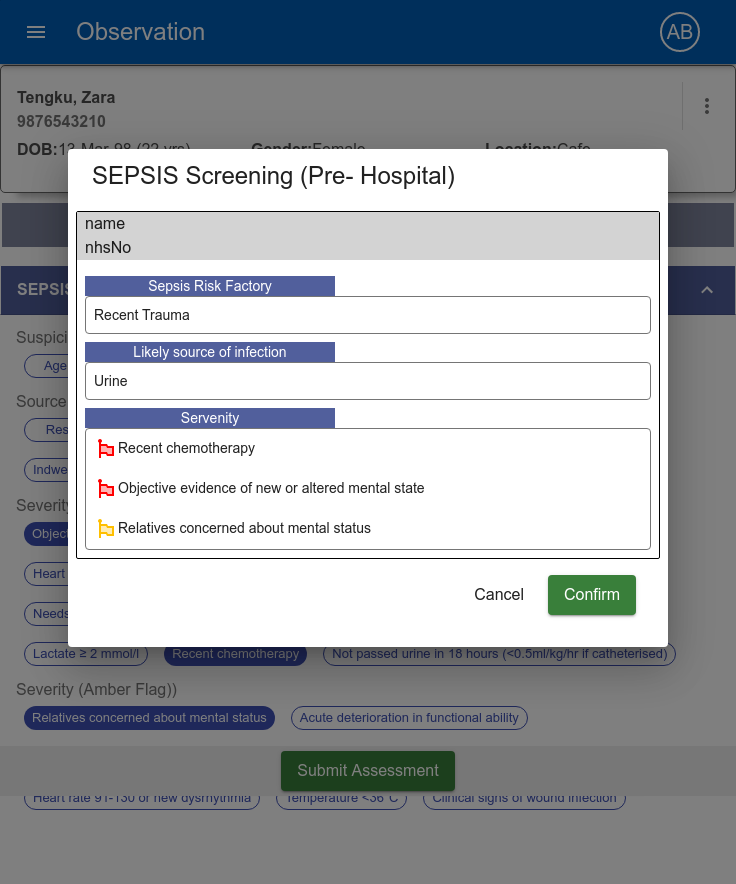
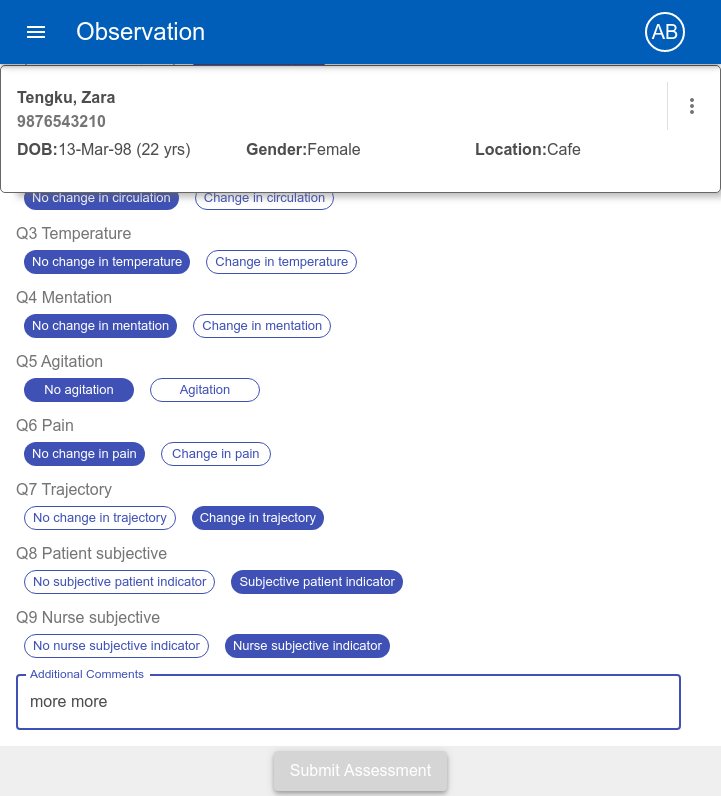
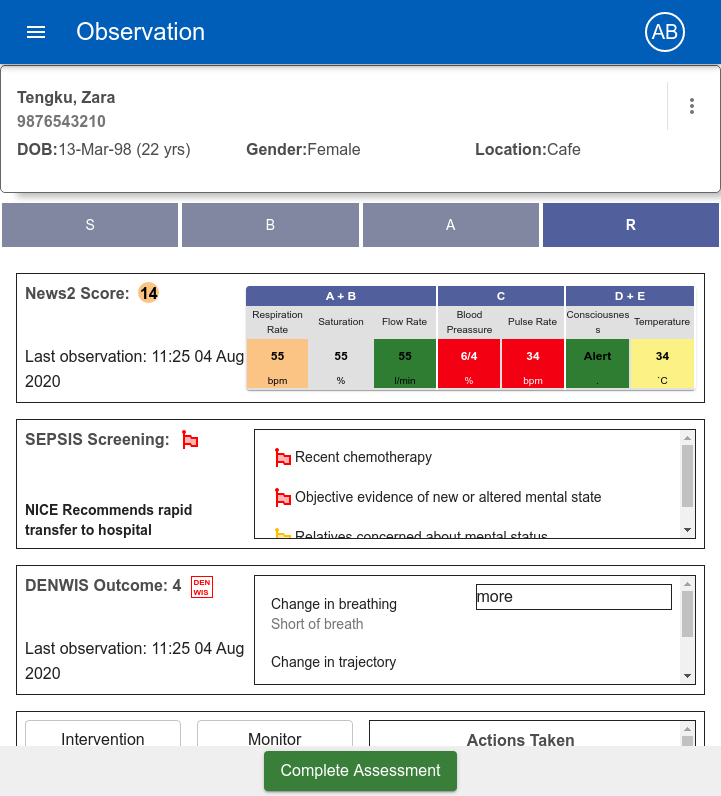
The same application runs on phone, tablet and desktop - designed for the reality of care-home work, where the device at hand is whatever is nearest.
What it became
The prototype proved that a clinical assessment application could be specified, built and piloted on open clinical models at emergency speed. It carried the Care Protect identity during the pandemic, and its productisation successor is Care Precision - the electronic observations and deteriorating-patient product family recorded in the product legacy.
All screens on this page show demonstration patients from the development and pilot builds.
- Source code - COVID-19 screening interface (Apperta Foundation)
- The COVID-19 response - the ten-days-in-March story and the co-assessment concept behind this application.
- Product legacy - Care Precision, EHRTap and CakeStack.